
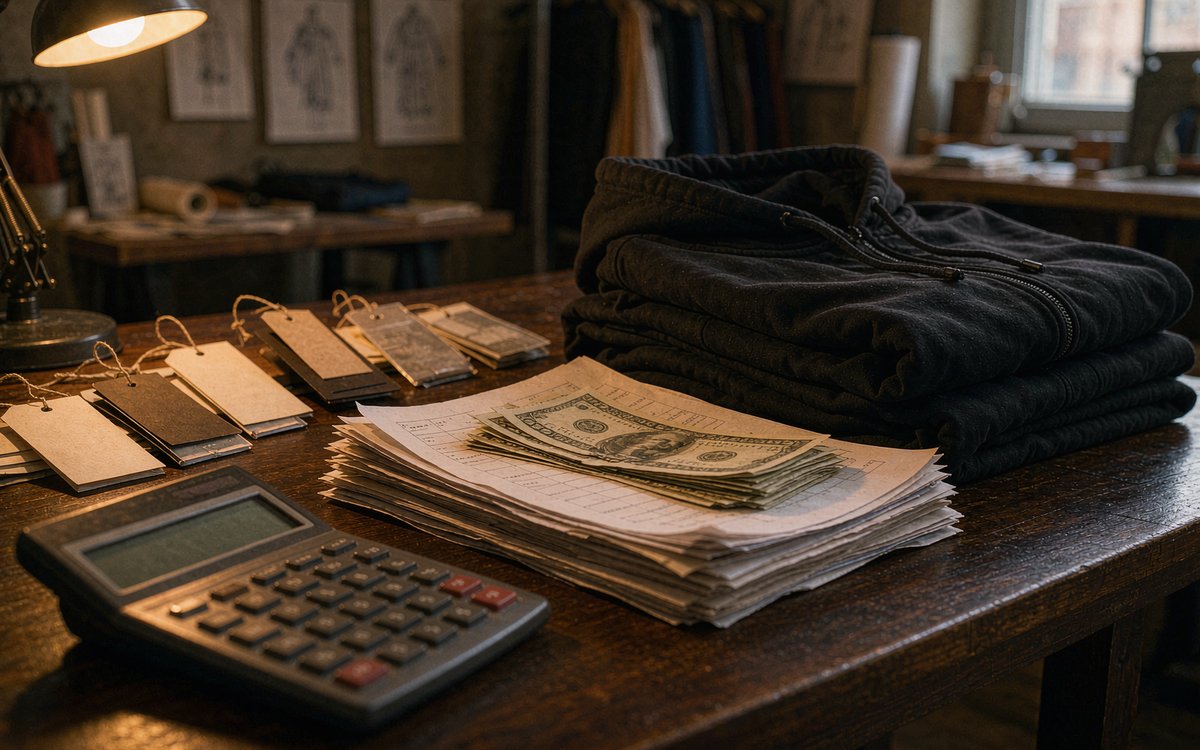
Short answer: before placing a production order, a clothing brand needs the full cost map — not just the factory's unit price, but sampling, materials, freight, duties, packaging, marketing, and the weeks of operating expenses that must survive until customer payments arrive. The brands that get into trouble are rarely unprofitable on paper. They're the ones whose cash left months before their revenue came back.
From the factory side, we've watched this happen to good brands with strong products. The order was profitable. The timing wasn't. This guide is the cash-flow version of the conversation we wish every client had before confirming a purchase order, not after.
1. Why profitable clothing brands still run out of cash
Profit is an opinion measured at a point in time; cash flow is a fact measured across time. In clothing, the two diverge brutally because of the sequence of events:
- You pay for sampling and development.
- You pay a production deposit — typically 30–50% of the order.
- You pay the balance before the goods ship.
- You pay freight, duties, and receiving costs.
- The inventory sits while it sells — weeks or months.
- Only then does revenue arrive, sometimes minus platform payout delays and wholesale terms.
Between step one and step six, every dollar of that order is gone from your account but not yet replaced. If the cycle from deposit to collected revenue runs four months — a realistic figure for an overseas production run with sea freight — then a profitable order still creates a four-month hole in your cash. Stack two collections' cycles on top of each other and even a growing brand can run dry.
This is not a small-brand problem. LVMH and Kering were estimated to be sitting on a combined ~€5 billion of excess inventory in 2024 — money converted into goods faster than it converted back. Scale changes the numbers, not the physics.
2. The full cost of a production order is never the unit price
The quote says $12 per hoodie. The order does not cost $12 per hoodie. A complete production budget has eight lines, and first-time founders routinely budget three of them:
- Garment production — the quoted unit price times quantity.
- Sampling and development — sample fees, pattern work, and the 2–3 rounds most products need before approval.
- Materials surcharges — custom dye lots, special trims, branded hardware.
- Labels and packaging — woven labels, hang tags, polybags, boxes.
- Freight — international shipping, which moves with fuel prices and seasons. Sea freight for a few hundred kilograms is a different cost structure than the air freight you'll be tempted to book when you're late.
- Duties and taxes — import duty on apparel into the US commonly runs in the teens to ~30%+ depending on fabric and construction, calculated on declared value. (Unless your terms are DDP — delivered duty paid — in which case your manufacturer prices this in and you see one number.)
- Warehousing and fulfillment — receiving, storage, pick-and-pack.
- Selling costs — the ads, photography, and platform fees required to turn stock into revenue.
A rule of thumb we give clients: whatever the production quote says, the all-in landed-and-selling cost is typically 1.3–1.6× that number, depending on freight mode and duty exposure. Budget the multiplier, not the quote.
3. Inventory is where working capital goes to wait
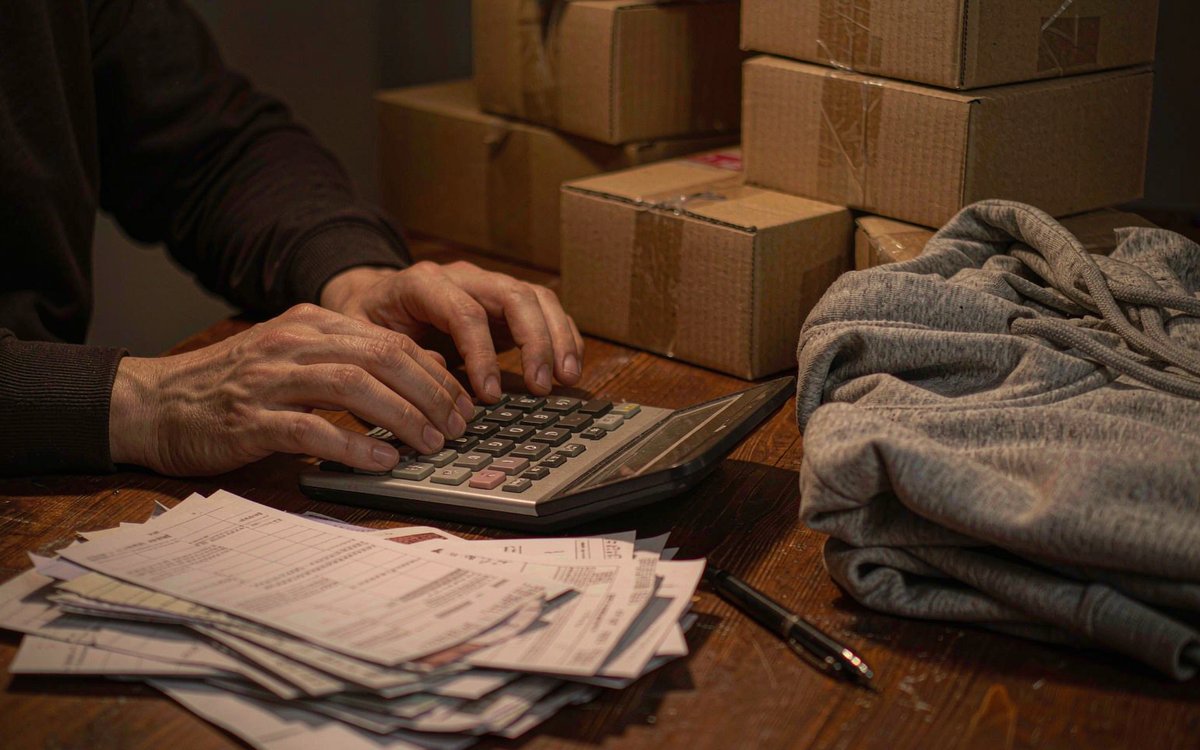
Every unsold garment is cash wearing a costume. A brand holding $80,000 of inventory at cost is not "asset-rich" in any operational sense — it has $80,000 it cannot spend on the next order, the next campaign, or next month's rent.
The H&M case is the canonical warning at scale: in 2018 the company reported $4.3 billion of unsold stock — roughly a third of quarterly sales — and its profit dropped 62% as it discounted its way out. At brand scale the same ratio applies: when inventory routinely exceeds what you can sell in a replenishment cycle, you're not running a clothing business, you're running a storage business that occasionally sells things.
The healthy target is inventory sized to the gap between reorders: enough to cover demand during the production-and-shipping window, plus a deliberate safety buffer — and no more. Anything above that is not stock, it's parked cash paying you nothing.
4. Plan the payment timeline, not just the payment
Manufacturing payments don't arrive as one invoice; they arrive as a schedule. A typical structure for custom production — ours included — is a deposit to start (commonly 30–50%) and the balance before shipment, after inspection. Between those two points sits the production window: 20–35 days for bulk orders in our case, longer for complex development.
Map that schedule against your own calendar before you sign anything:
- What else needs cash during the production window? (Ads, rent, staff, your previous order's freight bill.)
- When does revenue from the current stock actually land, and does it arrive before the new order's balance is due?
- What happens to the schedule if production slips two weeks? Does your cash survive the slip?
Brands get squeezed when the balance payment lands before the previous collection's revenue does. The fix is sequencing: don't trigger a new production cycle until the cash from the last one is visibly converting — or size the new order so both can be true at once.
5. Don't let shipping and duties be the surprise invoice
The two most common "we didn't budget for that" items are freight and duties, precisely because they arrive after the production money is already spent.
Freight is a mode decision with cash consequences: sea freight is cheap per kilogram and slow; air freight is brutally expensive and fast. The expensive version of this decision is the unplanned one — booking air because production ran late and a launch date was promised. Duty is a terms decision: under DDP (Delivered Duty Paid), which is how we ship most orders, duties and import handling are priced into the quote, so your landed cost is knowable before you commit. Under FOB or EXW terms, the duty bill is yours to discover later — along with the customs broker fees you didn't know existed.
Whichever terms you use, the discipline is the same: get the landed cost per unit — product plus freight plus duty divided by units — before confirming the order, and check your retail price against that number. A margin that works against the ex-factory price can evaporate against the landed one.
6. Use pre-orders to shorten the cash gap — carefully
The deepest structural fix to the clothing cash-flow problem is collecting revenue earlier. Pre-orders do exactly that: customer money arrives before or during production instead of months after. The entire made-to-order wave — brands like Dancing Leopard, which rebuilt around on-demand production after administration and now tests with 100–200 piece runs — is fundamentally a cash-flow strategy as much as an inventory one.
The caveat is that pre-orders convert inventory risk into delivery risk. You are now obligated to a timeline, which means the production schedule stops being the factory's problem and becomes your promise. Brands running this model need confirmed lead times and a buffer built in — our repeat orders run 20–35 days, and a pre-order campaign should quote customers that window plus shipping plus slack, never the optimistic number.
7. Build the budget and the reserve before the PO
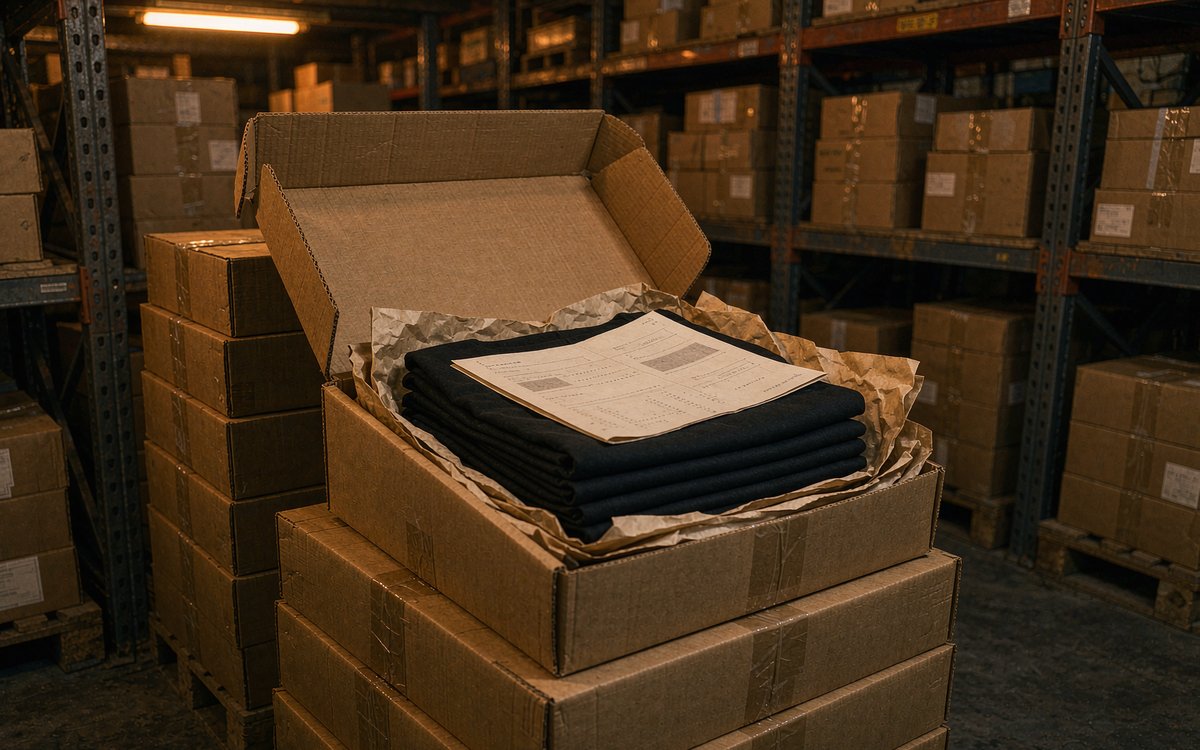
Before confirming any production order, run this checklist:
- Full landed budget — production, sampling, packaging, freight, duties, fulfillment, selling costs. Not the quote; the multiplier.
- Payment timeline — deposit date, balance date, and every other cash demand in the same window.
- Revenue timeline — when the stock realistically starts converting, and how long until peak sell-through. Use your last drop's data, not your hopes.
- The reserve — working capital that survives the entire cycle untouched. If placing this order leaves you unable to pay three months of operating costs without selling a single unit, the order is too big.
- The escape hatch — what happens if it sells at half speed? Know your markdown math and your exit channels in advance.
The brands that survive long enough to matter are not the ones that place the biggest orders. They're the ones whose orders are sized so that being wrong is survivable and being right is repeatable.
"Nobody goes out of business because a product was unprofitable. They go out of business because the cash ran out two months before the profitable product finished selling."
Frequently asked questions
What payment terms do clothing manufacturers usually require?
The common structure for custom production is a deposit of 30–50% to start work and the balance before shipment, after quality inspection. Very large or very small orders sometimes vary. Be cautious of anyone demanding 100% upfront, and equally of anyone offering net terms to a brand-new client — both are usually signals worth investigating.
How much cash reserve should a clothing brand keep?
Enough to cover your fixed operating costs plus any committed payments for the length of one full production-to-revenue cycle — realistically two to four months for overseas production. If a planned order would consume the reserve entirely, reduce the order, don't reduce the reserve. The reserve is what lets you survive a slow sell-through without panic-discounting.
Is it cheaper to ship by sea or air for a small clothing brand?
Sea, by a wide margin — air freight can cost several times more per kilogram. But sea adds weeks, so the real answer is to plan early enough that sea is always an option. The expensive scenario is the unplanned air shipment booked to rescue a late production schedule; eliminating those emergencies is worth more than any rate negotiation.
What does DDP mean and should I ask for it?
DDP (Delivered Duty Paid) means the seller handles shipping, import duties, and customs — you receive goods at your door for one agreed price. For small brands without a customs broker, it converts an unpredictable stack of freight and duty invoices into a single knowable landed cost. We ship most orders DDP for exactly this reason; whatever supplier you use, ask for a landed-cost number before confirming an order.
How do I know if I can afford a production order?
Build the all-in budget (production ×1.3–1.6 for freight, duties, packaging and selling costs), map the deposit and balance dates against your other cash demands, and check that after both payments you still hold a reserve covering two to four months of operations. If any of those checks fails, shrink the quantity or delay the order — the factory will still be there when your cash position is.
Conclusion
Cash-flow management for a clothing brand is mostly arithmetic done early: the full cost map instead of the unit price, the payment timeline instead of the invoice, and a reserve sized to the length of your production-to-revenue cycle. Do that math before the purchase order and production stops being the moment brands run out of money.
If you're pricing a production run and want the landed cost, payment schedule, and realistic timeline in one document before you commit — that's literally the quote we send. Start the conversation here.