
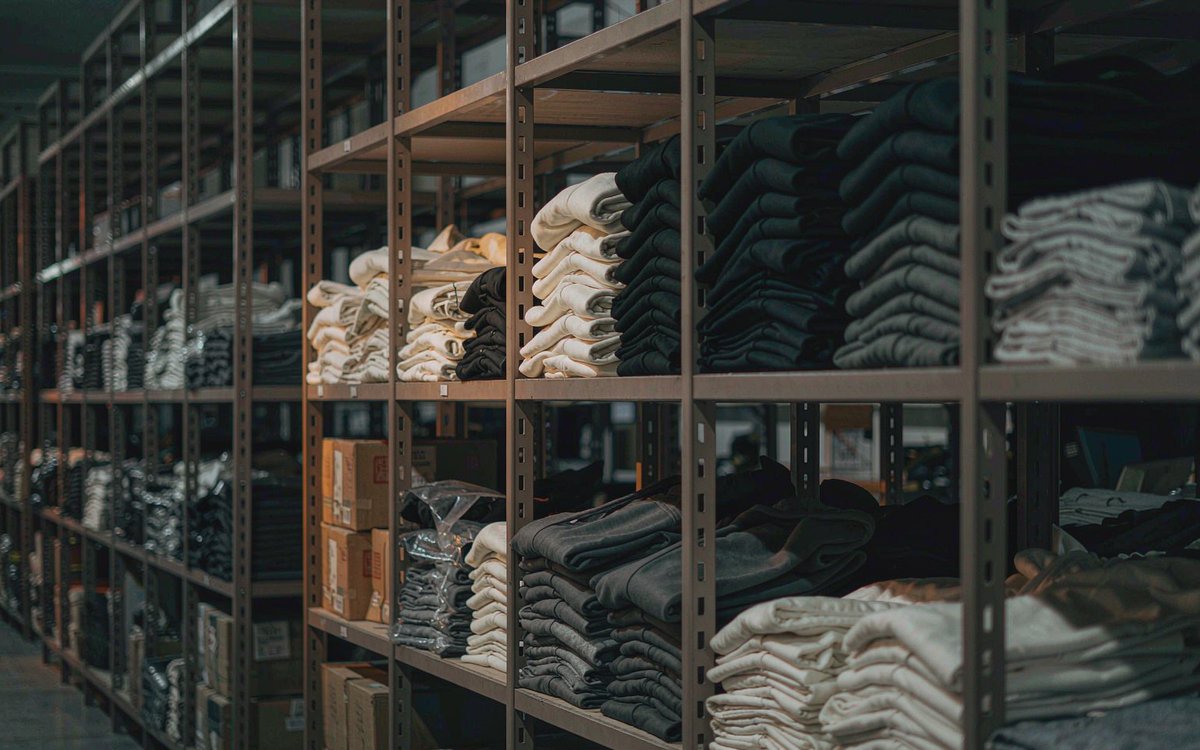
Short answer: clothing brands prevent overstock by producing against evidence, not optimism — analyzing sales before production, starting new styles with controlled quantities, managing stock by individual size and color, and reordering proven products instead of constantly launching new ones. The brands that drown in unsold inventory rarely have a sales problem first. They have a planning problem that started months earlier, at the moment they decided how many units to make.
We see this from the factory side. Since 2007 we've produced for hundreds of streetwear brands, and the pattern is consistent: the clients still reordering after five years are almost never the ones who placed the biggest first orders. They're the ones who treated inventory as a series of small, correctable decisions instead of one big bet.
1. Why clothing brands end up with excess inventory
Overstock is not a niche problem. The BoF–McKinsey State of Fashion report estimated that the industry produced roughly 2.5 to 5 billion items of excess stock in 2023 alone — worth $70 to $140 billion. That is not a rounding error; it's a structural feature of how fashion buys get made: quantities are locked in months before the first customer reaction is visible.
The mechanism is always the same three-step loop:
- Forecast without evidence. The brand estimates demand for a product that has never been sold, using enthusiasm as a proxy for data.
- Order for the best case. Quantities are set at what the brand hopes to sell, sometimes padded to hit a lower unit price.
- Discover reality too late. By the time sales data exists, the stock is already produced, shipped, and sitting in a warehouse — paid for in full.
The most famous example: in 2018, H&M reported $4.3 billion of unsold inventory — about 31.9% of its quarterly sales — after years of aggressive assortment expansion. If a company with world-class forecasting teams can over-buy by a third, a ten-person streetwear brand trusting its gut has no chance of doing better by instinct alone.
2. The inventory planning mistakes that cause it
After watching hundreds of production cycles, the mistakes cluster into five recurring patterns:
- Buying depth in unproven styles. A new silhouette gets 300 units because "it looks strong." Nobody knows yet whether customers agree.
- Ignoring the size curve. Ordering equal quantities of every size feels fair and is almost always wrong. McKinsey estimates inaccurate size buying can cost a brand up to 20% of monthly profit — through size-level stockouts and size-level overstock at the same time.
- Chasing unit cost with volume. "If we make 500 instead of 200, each piece is $2 cheaper." True — and irrelevant if 300 of them never sell. You didn't save $2 a unit; you turned $2 of savings into thousands of dollars of dead stock.
- Launching width instead of depth on winners. Ten new styles instead of reordering the two that actually sell. New styles feel like growth; reorders feel boring. Only one of them reliably generates cash.
- No defined stop rule. Nobody decides in advance what "this product failed" looks like, so slow styles linger, get re-ordered "one more time," and quietly become permanent inventory.
3. Analyze product sales before you produce
The cheapest inventory decision is the one made before the purchase order. Before confirming any quantity, pull three numbers per style:
- Sell-through rate — units sold ÷ units received, for a defined window. A style at 80% sell-through in eight weeks earns depth. A style at 30% does not.
- Sales velocity — units per week, per SKU. This is the input to every reorder calculation you'll ever make.
- Contribution margin per unit — not just revenue. A fast-selling style with thin margin can be worth less cash than a slower one with strong margin.
For a first collection with no history, the equivalent discipline is borrowing evidence: sell-through logic applied to comparable products, pre-order counts, waitlist signups, even the engagement-to-purchase conversion of your last drop. Weak evidence is still better than no evidence — and it should set a smaller quantity, never a bigger one.
4. Manage inventory by style, size, and color — not by totals
"We have 2,000 units in stock" is a meaningless sentence. The truthful version is always a table: style × size × color, with velocity per cell.
In practice, demand concentrates. Across the brands we produce for, black and neutral colorways routinely outsell everything else; medium and large typically carry men's streetwear size curves. When a brand orders 50 units split evenly across five colors, the usual outcome is two colors gone in a month and three colors still sitting there at month six.
The fix is unglamorous: track every SKU's weeks-of-cover (stock on hand ÷ weekly sales). Anything above 12–16 weeks of cover is a markdown candidate; anything below 4 weeks on a proven style is a reorder candidate. The total inventory number will take care of itself.
5. Use smaller initial orders to buy information
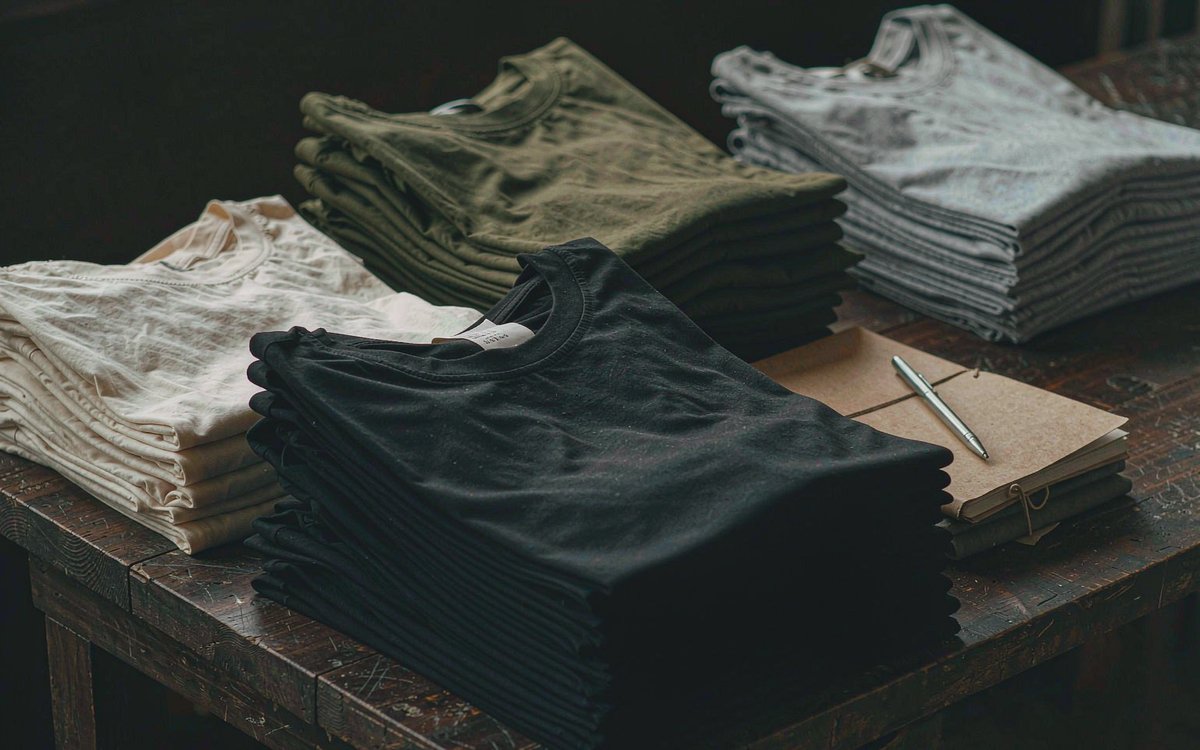
The single most reliable overstock prevention tool is a smaller first order. A 50–100 unit run of a new style is not a revenue event — it's a paid market test. You're buying two things: the product, and the knowledge of how fast it sells.
This is the logic behind the brands that shifted entire business models onto it. UK womenswear label Dancing Leopard, after being bought out of administration, rebuilt around on-demand production: test runs of 100–200 pieces, scale what sells, never commit to depth upfront. Their founder's reasoning, reported by Drapers, was blunt — forecasting 9–12 months ahead is "basically guessing," so they stopped organizing the business around guesses.
Small orders only work if your supply chain supports them, which is why MOQ structure matters more than most founders realize. A custom MOQ of 50 pieces per style (our floor for cut-and-sew streetwear; blanks can start at 20) exists precisely so a brand can test without betting the quarter. If your manufacturer's minimum forces you to order 500 of an unproven style, the MOQ itself is your inventory risk.
6. Know when to replenish — and when to stop
Every style needs two decisions made in advance, written down before launch:
- The reorder trigger. "If this sells X units per week for Y weeks and weeks-of-cover drops below our production lead time, we reorder." For a style selling 20 units a week with a 4-week replenishment cycle, that trigger fires around 80 units remaining, plus whatever safety stock you hold.
- The stop rule. "If sell-through is below Z% at week 8, we do not reorder, and remaining stock goes into a planned exit — bundle, promotion, or alternative channel."
The stop rule is the one brands skip, because killing a product feels like admitting failure. But every week a dead style sits in your warehouse, it charges you rent in the form of tied-up cash — cash that could be a reorder of the style that's actually selling. Cutting losers early is not pessimism; it's how you fund the winners.
7. Build flexibility into the strategy itself
None of the above works as a one-time cleanup. The brands that stay lean treat inventory planning as a repeating loop:
- Test small — controlled first orders on anything unproven.
- Measure weekly — velocity and weeks-of-cover per SKU, not per collection.
- Reorder fast — depth into proven sellers while demand is hot.
- Exit deliberately — planned markdowns or bundles for the tail, timed before the stock ages.
- Feed it forward — every cycle's data makes the next cycle's quantities smarter.
The goal was never "produce less." It's to produce the right products in the right quantities at the right time — and to make sure a wrong guess costs you 50 units instead of 500.
"Overstock isn't caused by bad selling. It's caused by buying decisions made months earlier with no mechanism to correct them. Shrink the bet, shorten the loop, and the problem mostly disappears."
Frequently asked questions
What is a good sell-through rate for a clothing brand?
For seasonal fashion, 60–70% sell-through by mid-season and 80%+ by end of season is a healthy benchmark. Consistently landing far below that points to over-buying or product-market fit issues; consistently selling out in days points to under-buying and lost revenue. The number only matters per SKU and per defined time window — a blended average hides both problems.
How small can a first production order realistically be?
For genuine custom cut-and-sew streetwear, 50 pieces per style per color is a workable industry floor — that's our MOQ, and it exists so brands can test without overcommitting. Blank garments for printing can start lower (around 20 pieces with us). Below those numbers, per-unit economics and factory line efficiency break down, and print-on-demand becomes the more rational test channel.
Should I discount slow-moving stock or hold it for next season?
Decide with weeks-of-cover and holding cost, not hope. If a style has more than 12–16 weeks of stock and falling velocity, the cash freed by a planned exit is usually worth more than the margin you protect by holding. The exception is genuinely seasonless core product with stable demand — heavyweight basics can often hold price into the next season; trend-driven graphics cannot.
Is overstock really that expensive if I have cheap storage?
Storage is the smallest part of the cost. The real price is the working capital frozen inside unsold units — money already paid for fabric, production, and freight that can't fund your next order. IHL Group estimated the total cost of inventory distortion (overstock plus stockouts) at $1.73 trillion globally in 2025. At brand scale, the same math applies: dead stock doesn't just sit there, it starves your winners.
How do I stop over-ordering on new designs I'm confident about?
Confidence is not evidence — every brand that ever sat on dead stock was confident when they ordered. Give every new design a test budget: a controlled first run, a defined sell-through checkpoint, and a pre-agreed reorder trigger. If the design is as strong as you believe, the test will prove it in weeks and you can reorder with certainty instead of hope.
Conclusion
Preventing overstock is not about being conservative — it's about being correctable. Analyze what sells before you produce, buy depth only into proven SKUs, size your first orders as paid tests, and give every style both a reorder trigger and a stop rule. Do that consistently and inventory stops being the place your cash goes to die.
And if you're working out how to structure a first order that tests the market without betting your budget on it — that's a conversation we have every week. Talk to us about flexible production runs, or read on for the forecasting side of the equation.