
Every streetwear brand starts with the same ambition: a heavyweight T-shirt or hoodie that feels like a flagship product. Most brands pick a manufacturer the way they pick a blank — by price list. Then the samples arrive, the bulk order runs, and the difference between "heavyweight" and "heavyweight done right" shows up in the collar, the seams and the wash-test report.
Heavyweight clothing is genuinely harder to manufacture than standard garments: dense fabric is harder to cut, sew and stabilise, and shrinkage behaves differently. Choosing the right factory is therefore a real decision, not a formality. Here is the checklist we use with brands — and the one we would want a buyer to run on us.
Step 1: Confirm the GSM Range and Fabric Development First
Before discussing MOQ or price, ask what fabric the factory actually produces. A streetwear heavyweight program needs a partner that works at 280–500 GSM as a matter of course, not a novelty.
- Ask for their standard GSM ladder. A specialist will answer immediately — for example DOLUXE's ladder runs 300 GSM tees, 400 GSM tees and hoodies, 480/500 GSM hoodies, 580 GSM sweatshirts and up to 630 GSM extreme pieces.
- Ask whether fabric is developed in-house or bought as blanks. Factories that develop fabric can adjust yarn count, knit density and hand-feel to your spec; blank-based factories can only offer what they stock.
- Ask for the yarn spec, not just the weight. Combed long-staple cotton and compact/Siro spinning are the markers of premium heavyweight; if the factory cannot describe its yarn, the "300 GSM" claim means little.
Step 2: Verify Fabric Testing and Shrinkage Control
High-GSM cotton shrinks more than light fabric unless it is stabilised. This is where heavyweight programs succeed or fail:
- Pre-shrinking: the factory should run high-temperature steam pre-shrinking and hold shrinkage within roughly ±2%. Ask for the wash-test report for your exact fabric, not a generic one.
- Opacity and density: stretch a fabric sample — if the knit opens into gaps, density is poor regardless of the GSM number.
- Colour consistency: heavyweight programs are often garment-dyed. Confirm the factory controls dye lots and can deliver consistent shade across production runs.

Step 3: Audit Construction and Quality Control Capability
Heavyweight fabric punishes weak sewing. Evaluate these specifics:
- Neckline reinforcement (woven neck tape, collar rib matched to fabric weight) on heavyweight T-shirts; reinforced pocket bags, cuffs and stress points on heavyweight hoodies.
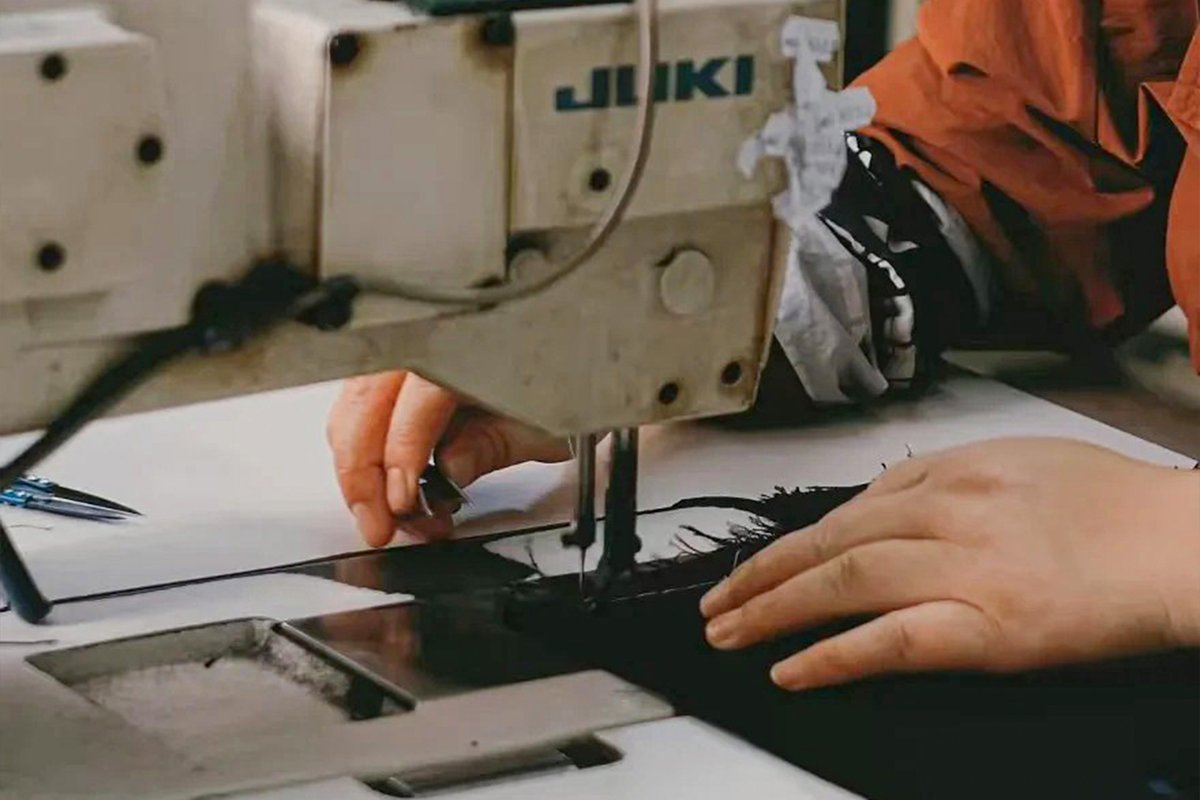
- Machine park: dense fabric needs heavier-duty machines and correct needle/thread selection. Ask which machines handle their heaviest fabric.
- QC process: a real factory has inline inspection plus final AQL-based inspection before packing. Ask for their AQL level and whether third-party inspection (SGS, etc.) is accepted — it should be.
- Production capacity: confirm the factory has the floor to run your order when you need it. At DOLUXE that is two factories in Guangdong and Hubei, 200+ workers and roughly 100,000 pieces monthly.
Step 4: Test Sampling Speed and Communication
The sample stage reveals how a factory will behave during bulk. Use it as a test:
- Sample lead time: 3–15 days for a development sample is a healthy benchmark, depending on fabric and decoration.
- Request a size set and a wash-test sample — not one perfect marketing sample. How the factory handles corrections and re-samples tells you everything.
- Ask for video or photos of your actual garment in production. A transparent factory will happily show the cutting table, the sewing line and the QC table.
- Evaluate communication: do you get clear answers in a reasonable time? A factory that is hard to reach during sampling will be painful during bulk.
Step 5: Understand MOQ, Pricing and Lead Times
Commercial terms are part of the vetting:
- MOQ: custom heavyweight programs commonly start at 50 pieces per colour per design at specialist factories; some offer 20-piece blanks programs. If a factory demands 1,000 pieces for a first trial, weigh that against your cash flow.
- Bulk lead time: 20–35 days after sample approval is typical for heavyweight cut-and-sew, plus transit time.
- Price transparency: request an itemised quote — fabric, cutting, sewing, decoration, trims, QC, packing. You need to know where the cost sits to negotiate later. Remember a 500 GSM hoodie legitimately costs more than a 400 GSM one; the cheapest quote on heavyweight is usually the first red flag, not a bargain.
- Payment terms: standard terms in the industry are typically 30% deposit with balance before shipment (T/T) or against B/L copy — confirm what the factory offers new clients.
Step 6: Choose Your Collaboration Model: OEM, ODM or Private Label
Manufacturers offer different levels of service, and the right one depends on your team:
You have tech packs and patterns.
The factory develops fabric, cuts, sews and finishes to your spec. Maximum control; you carry the development work.
You have a direction, not a tech pack.
The factory proposes silhouettes, fabrics and trims from proven options, then manufactures. Faster to market, lower development cost.
Fastest, lowest MOQ.
Pick existing heavyweight blanks and customise neck labels, packaging and small details. Best for testing a market before committing to development.
Many brands start private label or ODM to validate sales, then move to OEM as the line matures. Read our detailed OEM vs ODM comparison for the full trade-off analysis.
Red Flags When Choosing a Heavyweight Manufacturer
- They cannot name the GSM or yarn spec of their own "heavyweight" products.
- They quote an extremely low price for 400+ GSM cut-and-sew — quality costs what it costs.
- No wash-test data, no fabric swatches, no sample policy beyond a single photo-ready piece.
- They refuse third-party inspection or cannot show the production floor on a live video call.
- MOQ suddenly changes between sampling and bulk.
Why Brands Choose DOLUXE for Heavyweight Production
DOLUXE has specialised in heavyweight streetwear since 2007. We run two factories (Guangdong and Hubei) with 200+ workers and roughly 100,000 pieces of monthly output, producing heavyweight T-shirts, hoodies, sweatshirts and extreme-weight pants from 180 to 630 GSM. We develop fabric in-house, control pre-shrinking, run full OEM and ODM programs, and keep the MOQ at 50 pieces so growing brands can develop without betting the company on one order.
See our heavyweight capability page, browse the heavyweight T-shirt range and hoodie range, or send your tech pack to our team for a sample quotation.
DOLUXE — Do Luxury for Your Brands