
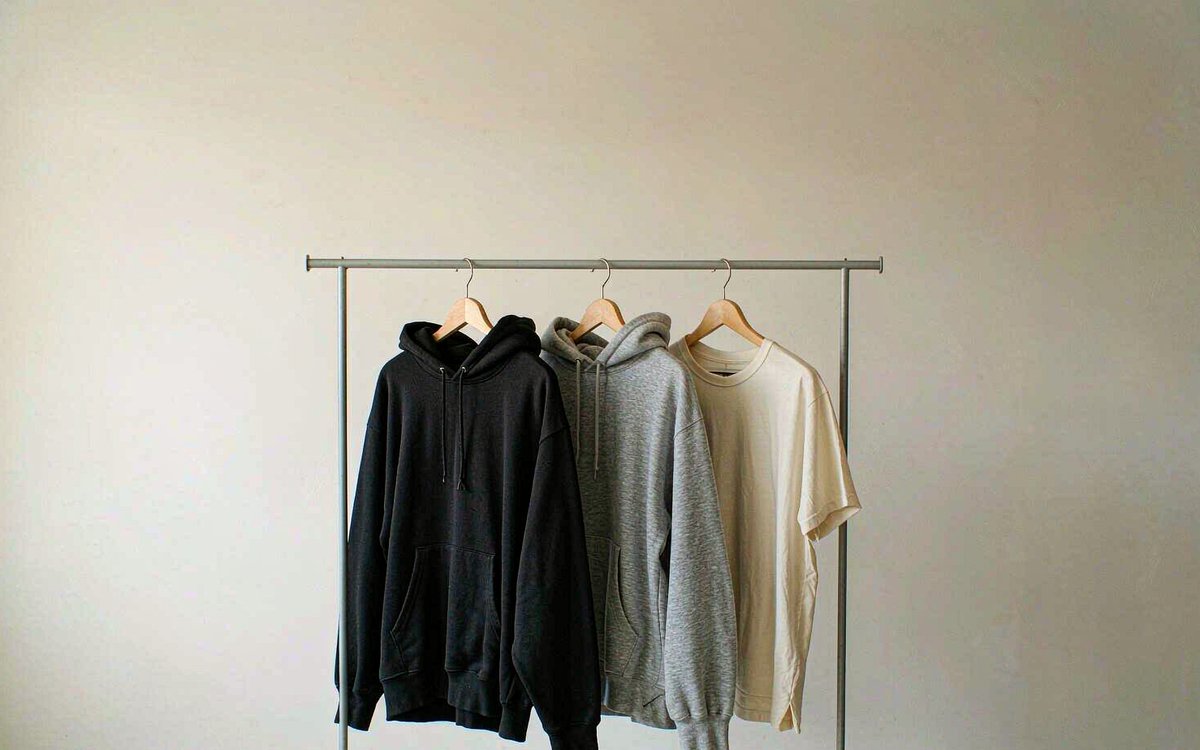
Short answer: launch with one to three hero products and, at most, a couple of supporting pieces that share their fabric and trims. Total: five styles or fewer. Enough to look like a brand, small enough that your budget buys depth instead of variety, and structured so your first drop teaches you exactly what to reorder. Everything above that number isn't ambition — it's dilution.
This is one of those questions where the wrong answer feels right. A full lookbook with twelve styles looks like a real brand. A rail with three pieces looks like you're not trying. But we've manufactured first collections for hundreds of brands since 2007, and the pattern is so consistent it's almost boring: the brands that launch small reorder within months. The brands that launch big are the ones emailing a year later asking if we can recommend anyone who buys leftover stock.
What goes wrong when you launch too many products
Do the math with real numbers. Say your total budget for first production is $12,000 — a typical figure we see. You have two options:
- Four styles, 50-80 pieces each. Enough depth to sell through, enough per style to learn whether it works, cash left for shipping and marketing.
- Twelve styles, 15-25 pieces each. The same money, atomized. No style has enough units to prove anything, you're out of mediums in your best seller within days, and there's no budget left to restock because it's all sitting in your nine slow styles.
But the money is only half of it. Every style you add multiplies the invisible work: another pattern to develop and fit-check, another set of trims to source, another sampling round to schedule, another thing that can go wrong in production. Twelve styles doesn't mean twelve times the outcome of one style. It means roughly twelve times the development chaos with a quarter of the budget behind each one.
And then there's the brand problem. A first drop is your positioning statement. "We make the heaviest hoodie you've ever owned" is a statement. "We make twelve things" is not.
What goes wrong when you launch with too few
Honesty requires covering the other extreme, because we see this too — though it's much rarer. Launching with literally one product has its own failure modes:
- One size run is your entire business. If that single style has a fit problem you didn't catch, or the color doesn't land, there's nothing else for a visitor to buy. Your test produced one data point, and if it's a bad one, you're done.
- No outfit logic. A hoodie alone is a product. A hoodie with a matching sweatpant in the same fleece is a collection — customers buy the second piece at a dramatically higher rate, and your average order value thanks you.
- It reads as a side project. Fair or not, a store with one item signals "experiment," not "brand." Two to three pieces is where perception flips.
So the answer isn't "one perfect product." It's "a small number of products that work as a system."
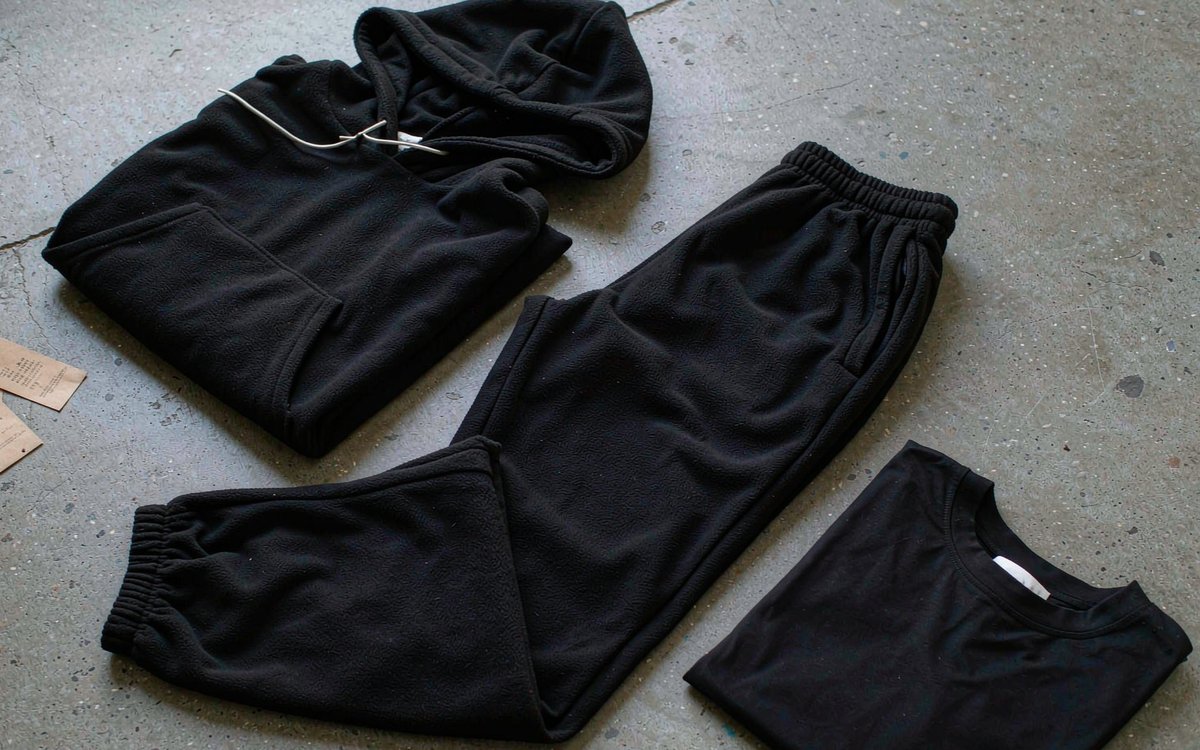
The structure that actually works: 1-3 heroes plus supporting cast
Here's the anatomy of a first collection we'd consider well-built:
One hero product
The piece your brand would be known for if it could only sell one thing. For most streetwear startups this is a heavyweight hoodie or a boxy tee — not because of fashion logic but business logic: year-round demand, broad size tolerance, high margin per unit, and it's the garment customers will use to judge your quality standards. Your hero gets the most development attention, the best photography, and the deepest inventory. Everything in the first drop exists to support its story.
Two or three supporting pieces
Items that extend the hero without extending your development budget. The key phrase: shared inputs. A sweatpant in the same fleece as your hero hoodie is one fabric development, one dye lot, one trim story — not a second product's worth of new work. A long-sleeve tee using the same jersey and the same print screen as your short-sleeve is nearly free to add. Every supporting piece should share fabric, colorways, or decoration with the hero. If a "supporting" piece needs its own fabric development, it's not supporting — it's a second collection sneaking in.
A tight color story
Two colorways, three at most. Black and one more. Every extra colorway is another dye lot to manage, another inventory pile to fund, another SKU that can sell out or sit. Color is the cheapest-looking way to expand a range and one of the most expensive in practice. Restraint here is what lets you restock fast when something hits.
"Your first collection isn't your brand's catalog. It's a controlled experiment with a logo on it. Design the experiment to give you clean answers."
How the first drop pays for the second
The point of going small isn't frugality — it's information quality. With four styles and two colorways, your sell-through data is legible: you can see exactly which style, color, and size earned its keep, and your second order writes itself. Restock the winners deep (reorders skip development entirely, so they're faster and cheaper per unit), cut the losers without ceremony, and add one — one — new style to test alongside them.
That's the rhythm that compounds: each drop is mostly proven products plus one new bet. Within a year you have a real range, except every piece in it was promoted there by customer data instead of by your hopes. Compare that to the brand that launched twelve styles on instinct and is still trying to sell nine of them.

Frequently asked questions
Is one hero product enough to launch a clothing brand?
It's enough to start selling, but fragile — one fit issue or one cold colorway and your entire launch stalls. Two to three coordinated pieces is the safer minimum: it reads as a brand, gives customers an outfit, and gives you a backup if one product underperforms. True single-product launches work best when the product is genuinely exceptional and the founder already has an audience.
How many pieces should I order per style for a first drop?
As few as your manufacturer sensibly allows — for custom cut-and-sew streetwear, 50 pieces per style per color is a workable industry floor. That sounds small until you remember the goal: the first run isn't your revenue plan, it's your final exam. Sell through it, read the data, restock the winners. A fast restock beats a deep first order almost every time.
Should all my first products be in the same color?
Not necessarily the same, but from one tight palette — black plus one other colorway covers most successful first drops we produce. It keeps dye lots simple, makes every piece photograph well together, and stops your budget from fragmenting across color inventory. New colors are a second-drop reward, not a first-drop expense.
When should I add new product categories?
When your hero category sells out twice and customers start asking for the adjacent thing — bottoms to go with the tops, a zip version of the pullover. Customer pull, not founder boredom, should drive expansion. Each new category is a new pattern block, new fabric, and new failure modes, so it should be answering proven demand.
How many products should a brand have by the end of year one?
There's no rule, but the pattern we see in healthy young brands is somewhere between five and ten styles by month twelve — and most of those arrived as proven restocks plus one new style per drop. Brands that hit twenty styles in year one almost always got there by launching wide rather than growing wide, and the difference shows in their sell-through.
Conclusion
Launch small, but launch as a system: one hero that carries your positioning, two or three supporting pieces that share its fabric and story, two colorways, shallow depth, fast restock. That structure maximizes what a first drop is actually for — not revenue, but clean answers about what your customer wants.
The founders who struggle with this advice usually struggle because twelve styles feels like believing in yourself and three feels like hedging. It's the opposite. Betting your whole budget on fifteen unproven ideas isn't confidence — it's refusing to find out. And if you want a manufacturing partner whose minimums (50 pieces custom, lower for blanks) are built around exactly this launch model, talk to us.